
In 2022, Illinois made a powerful statement about the professionalism of interior designers. Through the passage of House Bill 4715, signed by the Governor, the state expanded practice rights for Registered Interior Designers. Under this legislation, qualified interior designers in Illinois can now obtain a professional stamp and seal their own non-structural interior construction drawings for permitting purposes.
This change enacted by the Illinois General Assembly formally recognizes that interior designers who meet rigorous standards—typically including passing the National Council for Interior Design Qualification (NCIDQ) exam—possess the technical expertise to prepare code-compliant construction documents within their scope of practice.
This isn’t about decorating. It’s about professional accountability, life safety, and public trust.
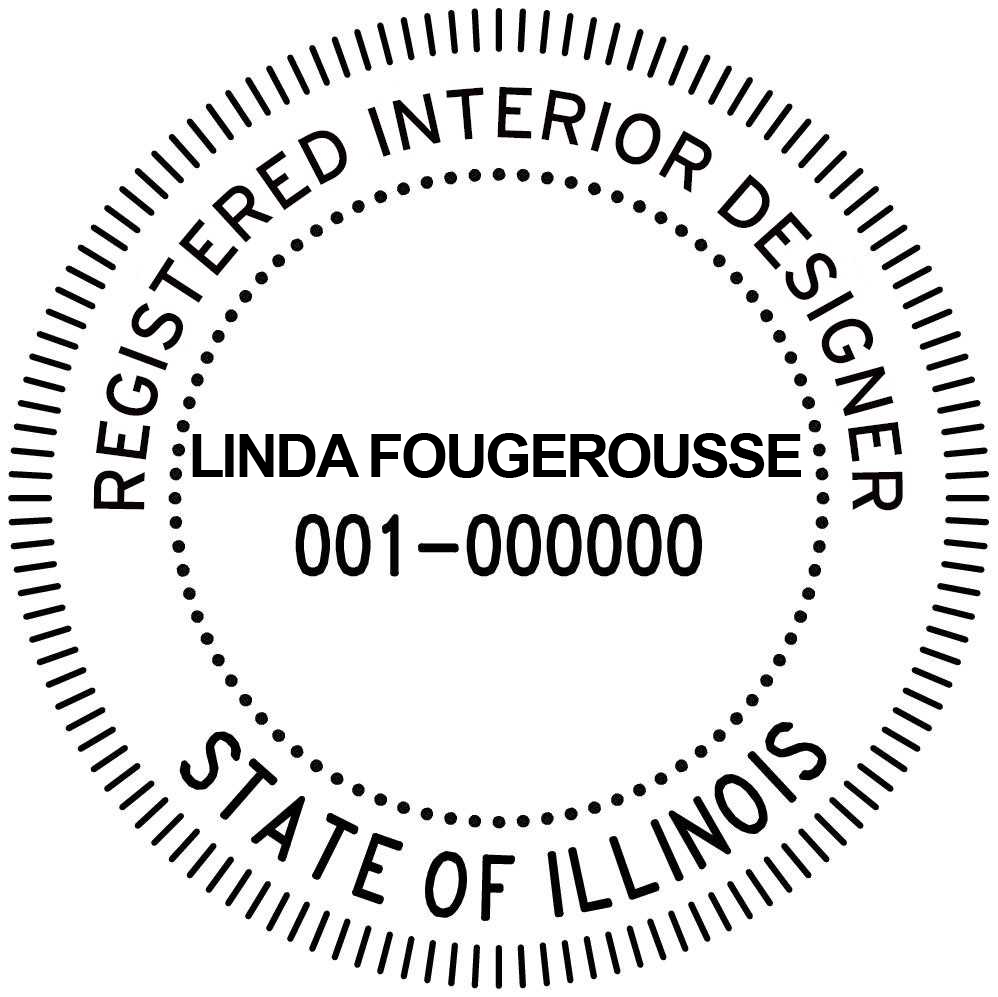
As a Licensed / Registered Interior Designer in both Illinois and Florida, I have met the education, examination, and experience requirements necessary to practice under both state regulations.
Holding licensure in multiple states reflects a commitment not only to design excellence, but to protecting public health, safety, and welfare wherever I work.
What Is NCIDQ Certification?
The NCIDQ Certificate is awarded by the Council for Interior Design Qualification and is the industry’s recognized benchmark for competency in interior design.
To earn this certification, designers must complete:
- Accredited education
- Documented supervised work experience
- A comprehensive three-part examination
The exam covers:
- Building systems
- Construction standards
- Codes and regulations
- Contract documents
- Professional practice
- Health, safety, and welfare
This is a technical credential—not an aesthetic one.
Protecting Health, Safety & Welfare
Interior designers make decisions that directly affect how people move through and function within a space. Certified designers understand:
- Fire-rated materials
- Means of egress
- ADA accessibility requirements
- Lighting standards
- Indoor air quality
- Safe finish specifications
NCIDQ certification verifies that a designer has demonstrated competency in these critical areas.
Code Knowledge & Technical Expertise
Building codes are complex and ever-changing. An NCIDQ-certified designer is trained to:
- Interpret and apply building codes correctly
- Coordinate with architects and engineers
- Produce detailed, permit-ready construction drawings
- Specify materials that meet regulatory requirements
The Illinois stamping privilege reinforces that certified designers are qualified to take responsibility for their technical work.
Professional Credibility & Legal Recognition
Many states require NCIDQ certification for registration or licensure. In jurisdictions with title or practice acts, passing the exam is often mandatory to legally use the title “Registered” or “Licensed Interior Designer.”
Being licensed in both Illinois and Florida means adhering to continuing education requirements, regulatory standards, and professional accountability in each state. It demonstrates a level of professionalism that goes far beyond aesthetics.
Client Confidence
For clients investing significant resources into residential or commercial projects, credentials matter. NCIDQ certification and state licensure signal:
- Verified education
- Documented experience
- Technical proficiency
- Ethical standards
- Accountability
In an industry where anyone can use the word “designer,” these credentials provide meaningful distinction.
Final Thoughts
Illinois’ decision to allow qualified interior designers to stamp and seal drawings is more than a legislative update—it is validation of the profession’s technical depth and responsibility.
The National Council for Interior Design Qualification certification—combined with state licensure in Illinois and Florida—ensures that the spaces I design are not only beautiful, but safe, functional, and fully compliant with the codes that protect the public.